Rust, How a Solo Player Held a Base Next to Oil Rig
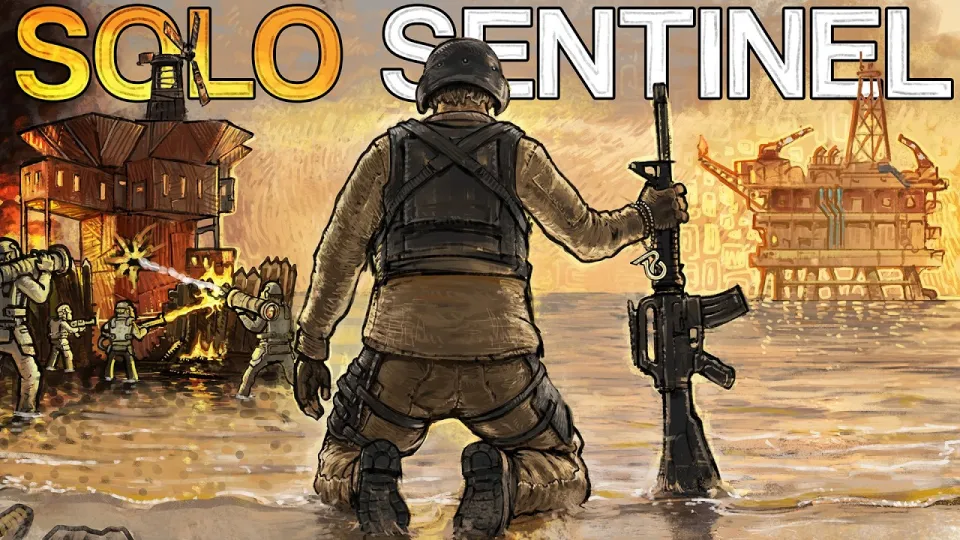
Video: The Solo Sentinel - Rust
Need articles like this for your video? They help promote it on YouTube and Google — order them in the Telegram bot @sat_sit_bot. The bot writes and publishes the articles itself (with your YouTube video embedded) on popular topical websites (no ads). Your first 50 articles are free.
· based on the channel Blooprint
Key takeaways
- Blooprint's solo run is built on a base placed directly next to Oil Rig, one of the most contested monuments in Rust.
- The wipe starts with a snowball: early PvP kills convert into guns, scrap and building materials before the base goes up.
- Defense relies on turrets, upgraded doors and layered loot rooms rather than on teammates.
- The base comes under a rocket raid around 3:30 AM server time, the video's climactic fight.
- Solo play is the format most requested by viewers, who prefer the play-by-play commentary over team comms.
Rust is a survival game where a solo player's best defense is preparation, and the clearest example is a base built right next to Oil Rig, the most contested monument on the map. In Blooprint's solo run, that placement turns every spawn, every boat trip and every cargo drop into a potential fight, and the whole wipe becomes a story about holding ground instead of giving it up. You can follow the same live grind on Blooprint's Twitch channel, where the wipe-day progression happens in real time.
Why building next to Oil Rig is both a trap and an advantage
Oil Rig is a high-tier monument: it spawns heavy military loot, requires a boat or a swim to reach, and attracts every group on the server who wants that loot. Building within sight of it means constant traffic — players arriving for crate runs, groups moving in for the puzzle, and raiders who already know the area is rich. The advantage is that every one of those visitors is a supply drop for a patient solo: a player who loses a fight at the rig usually leaves behind guns, ammo, medical supplies and components that a small base can process quickly. The trap is that a base in that spot is never truly safe, so the design has to assume it will be found. That means no obvious loot room behind a single wooden door, no exposed tool cupboard, and enough storage redundancy that losing one room does not end the wipe. Placement near the water also matters: a shoreline or shallow-water approach lets the defender rotate in from an unexpected angle, which is exactly what viewers of this style of base design report as the most frustrating thing to deal with when attacking.
The wipe-day snowball that funds the base
A solo wipe in Rust is decided in the first few hours, and this run follows the standard snowball logic: fight early, convert kills into gear, and never farm what you can take. The sequence usually looks like this:
- Spawn, gather the minimum for a bow or a crossbow and a handful of bandages.
- Contest a low-tier monument or a road for early scrap and components.
- Use the first gun or the first good kit from a kill to push into a higher-tier area.
- Bank scrap into blueprints at the workbench rather than hoarding it.
- Start the base only once the gear allows you to defend the build site.
That last point is what separates a solo base from a group base. A group can build first and arm later because someone is always online; a solo who starts a vulnerable structure too early simply hands a free raid to the first trio that walks past. In this run the base goes up with materials already earned, which is why the first night is survivable.
Base design: turrets, doors and the rooms that matter
Solo base defense in Rust comes down to a small number of decisions that repeat every wipe. Turrets are the backbone: a single auto turret covering the approach to a door forces attackers to spend explosives on the turret before they can spend them on the wall, and each turret effectively adds a layer of raid cost. Door upgrades follow the same principle — sheet metal and armored doors are not there to stop a determined group, they are there to make the raid expensive enough that the group chooses a softer target. Interior layout matters just as much. A compact footprint with a vertical stack of loot rooms, a sealed tool cupboard, and no single corridor that leads straight to everything is far harder to raid than a wide, flat base with one obvious path. Experienced solo players also spread value: some loot in the core, some in a secondary room, and a small stash elsewhere so a partial break-in does not wipe the wipe. The recurring community joke about sealing every room exists precisely because compartmentalization is the cheapest defense in the game.
What the 3:30 AM rocket raid shows about solo defense
Raids rarely arrive at a convenient time, and this one lands in the middle of the night, when a solo defender is at their slowest. The important detail is not the hour but the response: the defender is already upgrading and placing turrets when the rockets start flying, which means the base was being improved right up to the moment it was tested. A rocket raid against a prepared solo base is a cost calculation. Each rocket destroys a limited section of wall, so the attacker must decide whether to keep spending on a defended core or cut losses. Meanwhile the defender's job is to make every additional wall worth another rocket, to repair behind the damage, and to use the base's own geometry to force the attackers into turret fire. Even when the defense ultimately fails, the exchange rate is the point: a raid that costs a large rocket investment to crack a base built by one player is a loss for the attacking group in everything but the loot.
Questions solo players ask before trying this
Viewers watching solo content tend to raise the same practical doubts, and they are worth answering directly. The first is whether solo is more entertaining than group play: many players say yes, because a solo creator narrates every decision out loud, explaining why a door is being upgraded or why a fight is being avoided, while group footage drowns in voice comms. The second is whether a base next to Oil Rig is viable without a team — it is, but only with turrets and compartmentalization in place before the first night. The third is how to handle the social side: alliances with random players met during a wipe are a legitimate strategy and often produce the most memorable moments, even if they cannot be relied on in a raid. The fourth is time: a solo wipe demands a long first session, and the 3:30 AM raid is a fair warning about what that schedule looks like.
Where to follow Blooprint's Rust content
All of the channels and social links referenced in the video are collected here:
- Twitch: https://www.twitch.tv/blooprint
- Kick: https://kick.com/blooprint
- TikTok: https://www.tiktok.com/@blooprintgames
- Twitter: https://twitter.com/blooprintgames
- Discord: https://discord.gg/blooprint
Final thoughts on the Solo Sentinel approach
The Solo Sentinel is a useful template for anyone who wants to play Rust alone without hiding in a corner of the map: pick a high-value location, earn your gear before you build, and make the base expensive to break. Blooprint's breakdown of this wipe shows the full arc — the early snowball, the turret and door upgrades, and the late-night rocket raid that tests all of it. If you want to see the next solo run from the first minute, follow along on Blooprint's Twitch stream and compare your own wipe-day decisions against his.
Questions & answers
Is it possible to survive as a solo player with a base next to Oil Rig?
Yes, but only if the base is built to be raided. That means auto turrets covering the approaches, armored or sheet metal doors on every layer, a sealed tool cupboard and loot split across several compartments. Without those, a base in such a high-traffic spot is found and broken into within the first night.
Why do so many viewers prefer solo Rust videos over group content?
In solo videos the creator talks directly to the audience, explaining each decision as it happens — why a fight is skipped, why a door is upgraded, what the next goal is. Group footage is dominated by team comms, which leaves the viewer without that play-by-play. Solo also makes the struggle relatable, since most players experience the game alone.
How much does a rocket raid cost against a small solo base?
It depends on the material and the number of layers. A stone or sheet metal wall section takes several rockets, and each additional honeycombed layer multiplies the count. Turrets add more cost because they must be destroyed before the walls behind them can be worked on. That rising price is what often makes attackers abandon a defended solo base.
What is the fastest way to get gear on wipe day as a solo?
Snowball early. Take a bow or crossbow to a low-tier monument or road, convert the first kills into guns and components, then push into a higher-tier area with that gear. Bank scrap into blueprints at the workbench instead of hoarding it, and only start the base once you can defend the build site.
Source: The Solo Sentinel - Rust · Markdown version